

What Tinnitus Actually Is
Tinnitus is not a disease. It is a symptom — your brain perceiving sound when there is no outside source. People describe it as ringing, buzzing, hissing, humming, or a rhythmic whooshing. It can come and go, or it can feel constant.
It is also common. Research suggests that somewhere between 10 and 25 percent of adults experience some form of tinnitus, and for many it stays mild. But when it starts to interfere with your sleep, focus, or peace of mind, it deserves a real answer rather than a shrug.
Why Your Ears May Not Be the Whole Story
Because tinnitus is a sound, it is natural to assume the problem lives entirely in the ears. Sometimes it does. Noise exposure, age-related hearing changes, earwax, and certain medications are all worth ruling out, which is why a thorough hearing evaluation is a smart first step. Locally, we often point patients to the audiologists at the Idaho Elks Hearing and Balance Center, who offer dedicated tinnitus and balance testing right here in the Treasure Valley.
But many people notice their ringing changes when they turn their head, clench their jaw, or press on certain neck muscles. That is an important clue. When tinnitus shifts with movement or position, clinicians call it somatic or cervicogenic tinnitus — meaning the neck and jaw are feeding into it.
The Neck, the Jaw, and the Brainstem
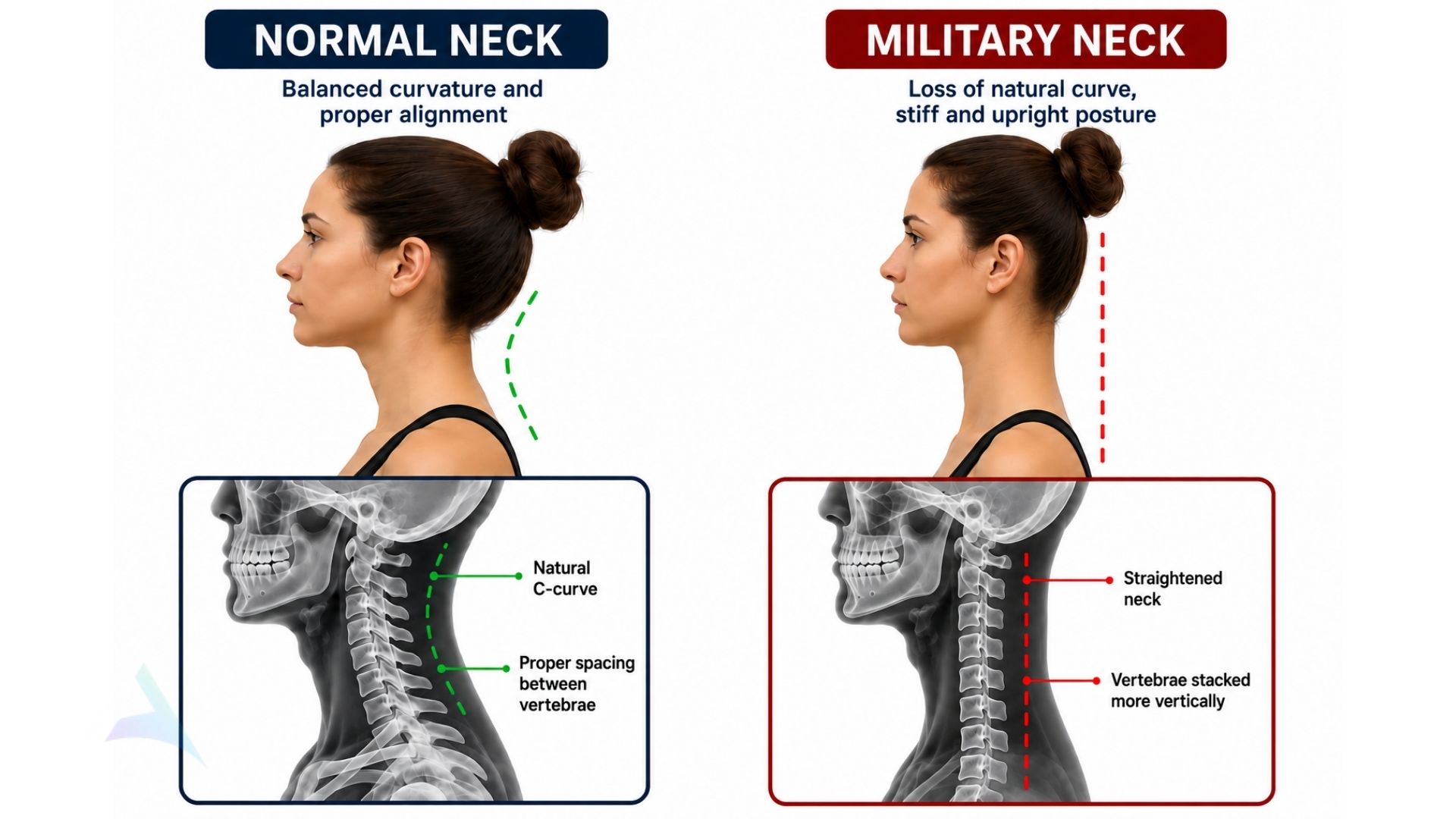
The top of your neck is a busy neighborhood. The atlas and axis — the top two bones in your spine — sit just below the brainstem, where signals from the head, jaw, and upper neck are gathered and sorted. It is worth understanding why these two small bones matter so much.
When this area is misaligned or irritated, those signals can become noisy, a little like static on a phone line. The same region is closely connected to the jaw joint, which helps explain why TMJ disorders and tinnitus so often appear together. It is also why tinnitus frequently travels alongside vertigo, dizziness, and inner-ear conditions like Ménière’s disease.
What the Research Shows — and What It Doesn’t
Here is the honest picture. The research on chiropractic care for tinnitus is still limited and made up mostly of case reports rather than large clinical trials. One frequently cited 2010 case study described a woman with Ménière’s disease and long-standing tinnitus whose symptoms eased after a short course of upper cervical care. That is encouraging, but a single case is not a guarantee, and we would never promise to “cure” tinnitus.
What we can say is more grounded: when a neck or jaw component is part of the picture, addressing it may reduce how loud or constant the ringing feels for some people. The aim is simply to remove interference so the nervous system can regulate itself more normally.

The Upper Cervical Approach at Peak
Upper cervical care is a focused branch of chiropractic that works only with the top of the neck, and it involves no twisting, cracking, or popping. If the thought of a forceful neck adjustment makes you tense up, this is a very different experience.
Your visit begins with precise measurement, not guesswork. We use 3D CBCT imaging and functional nervous system testing to see exactly where and how your atlas has shifted. From there we use gentle, specific methods such as the Blair upper cervical technique or the knee-chest technique to guide that bone back toward its natural position.
Don’t Forget the Jaw
Because the jaw and upper neck are so closely linked, tinnitus connected to TMJ often responds best when both areas are cared for together. For the dental side of jaw health, we are glad to have partners like BioSmiles Beautiful Natural Dentistry nearby — a Boise-area practice that shares our root-cause, whole-body philosophy and offers TMJ-focused care.
Everyday Habits That Support Your Nervous System
Tinnitus is often louder when you are stressed, worn down, or short on sleep, so the basics matter more than most people expect. A few simple tools Dr. Kyara often suggests to patients:
- Calm the nervous system. Magnesium supports healthy nerve and muscle function, and it is one of the first supplements we reach for. You can find practitioner-grade options we trust through our Fullscript dispensary, and we cover the bigger picture in our post on magnesium and nervous system health.
- Protect your sleep. A quiet, supportive sleep setup helps your brain turn the volume down. Many patients use a simple white-noise or sound machine at night — you can see the ones we like on our Amazon storefront — paired with a supportive, non-toxic mattress from Saatva or Avocado.
- Help your body downshift. Gentle recovery tools can make a relaxing part of a wind-down routine. A few favorites we share with patients are Hooga Health red light and Nurecover recovery devices (use code PEAKCHIRO).
None of these replace care. They simply give your nervous system a calmer place to heal.
Looking for Tinnitus Relief in Boise?
If your ringing changes with neck or jaw movement, comes with neck tension, or shows up alongside dizziness, your upper neck is worth a closer look. We would be glad to help you find out whether an upper cervical issue is part of your story. Learn more about why patients choose Peak, see that we proudly serve Boise and the Treasure Valley, and when you are ready, book your appointment with our team.