

.jpg)
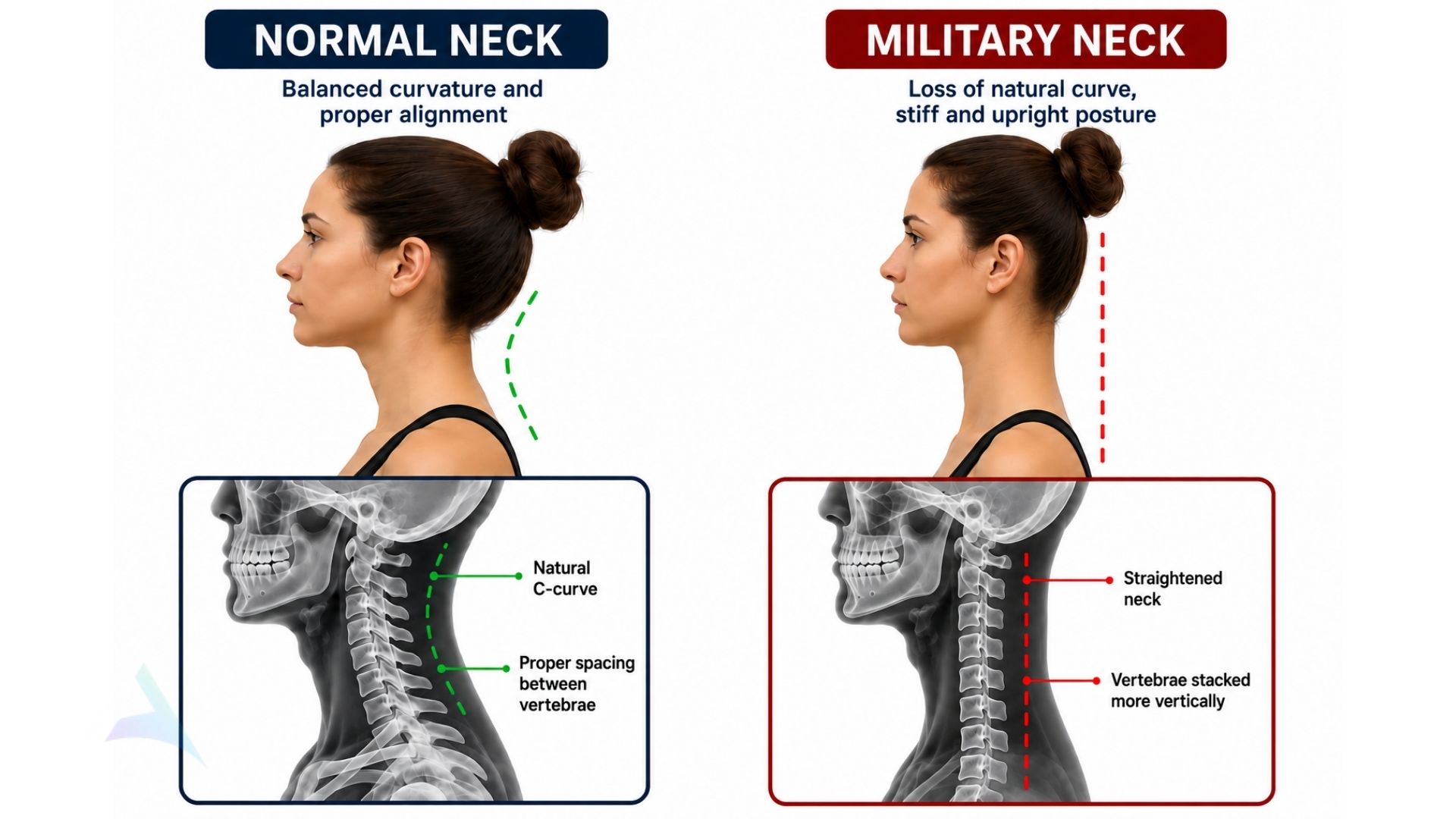
The Anatomy of Tech Neck
When the head is positioned forward, even by a few degrees, the weight of the head can place significant strain on the cervical spine. The top two vertebrae, the atlas (C1) and axis (C2), are especially vulnerable. These bones protect the brainstem, which is responsible for regulating:
- Nervous system communication throughout the body
- Heart rate and blood pressure
- Muscle coordination
- Organ function
- Sleep and energy regulation
When these vertebrae are misaligned, the brainstem can experience interference, which may manifest as a variety of symptoms beyond just neck pain.
Symptoms Linked to Tech Neck
People with prolonged forward head posture often experience:
- Neck, shoulder, and upper back pain
- Headaches or migraines
- Fatigue and low energy
- Brain fog or difficulty focusing
- Tingling or numbness in the arms or hands
These symptoms occur because misalignment disrupts proper nerve communication, alters blood flow, and can reduce cerebrospinal fluid circulation — all critical for nervous system health.
Why Upper Cervical Care Matters
Upper cervical chiropractic care focuses on precise adjustments to restore proper alignment to the atlas and axis. Correcting these misalignments can:
- Relieve pressure on the brainstem
- Restore proper nerve function
- Reduce tension in surrounding muscles
- Improve posture naturally
Patients often notice not only reduced pain but also increased mental clarity and energy after upper cervical adjustments. This demonstrates how deeply posture and alignment affect overall nervous system function.

Tips for Preventing and Correcting Tech Neck
While chiropractic care addresses the root cause, lifestyle adjustments can support long-term nervous system health:
- Ergonomic Workspace: Ensure monitors are at eye level and chairs support proper posture.
- Phone Awareness: Hold devices at eye level rather than looking down.
- Frequent Breaks: Stand, stretch, or walk every 30–45 minutes to relieve spinal stress.
- Posture Exercises: Gentle neck and shoulder stretches, chin tucks, and thoracic extensions strengthen postural muscles.
- Mindful Movement: Yoga, Pilates, or simple daily stretching helps maintain spinal flexibility and alignment.
The Nervous System Connection
Tech neck is more than a musculoskeletal issue — it affects the nervous system. The brainstem, protected by the top cervical vertebrae, is the central communication hub for your body. Misalignments from forward head posture interfere with these signals, leading to systemic symptoms like headaches, dizziness, and fatigue.
By addressing misalignments with upper cervical chiropractic care and supporting healthy posture habits, you allow your nervous system to operate efficiently, which can reduce symptoms and improve overall health.
✨ Takeaway: Tech neck is not just an aesthetic concern — it's a health concern. Restoring proper neck alignment supports the nervous system, improves posture, and reduces chronic pain, headaches, and fatigue.
✅ Bottom Line: Prioritizing upper cervical care, combined with mindful posture habits, protects your brainstem, supports nervous system function, and enhances overall quality of life.
Tools That Support Better Posture at Your Desk
If you spend long hours at a screen, your workspace setup matters as much as your care routine. A couple of things from our Amazon Storefront that our team finds genuinely useful — a height-adjustable standing desk makes it easy to alternate between sitting and standing throughout the day, which takes real pressure off the cervical spine. And for neck support during travel or long work sessions, the trtl neck pillow is one that's actually been shown to support proper neck position. Small changes in your environment add up.
Is tech neck affecting more than just your neck?
If you're dealing with recurring headaches, brain fog, or chronic neck stiffness, your posture and upper cervical alignment could be the starting point. At Peak Upper Cervical Center in Boise, we use advanced imaging to identify exactly where misalignment is occurring — and correct it with gentle, precise care. Schedule your consultation today.